cpglobalit

HDPE Membranes: The Smart Choice for Basement and Foundation Waterproofing

Introduction 

Underground structures face the toughest waterproofing challenge of all: constant hydrostatic pressure, chemical exposure from soil, plant roots, and zero access for repairs once construction is complete. Getting it right the first time is essential. That is why engineers across the world increasingly specify HDPE waterproofing membranes for basements, tunnels, and foundations. 

What Is an HDPE Membrane? 

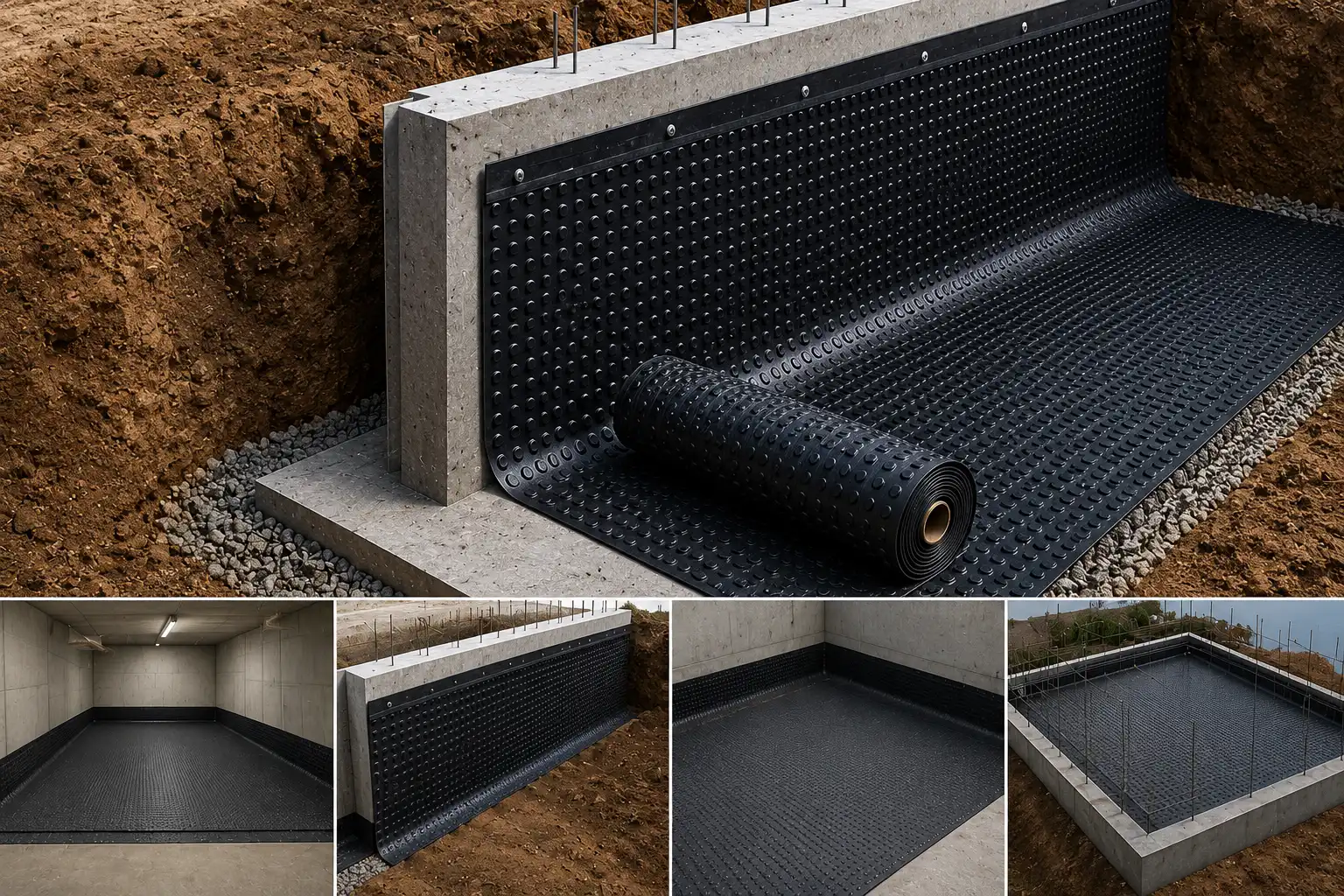
HDPE stands for High Density Polyethylene. CP Global HDPE membranes are durable, flexible, and chemically resistant sheets designed to protect structures from water infiltration. They offer high resistance to punctures, hydrostatic pressure, and lateral water migration, which makes them ideal for below grade applications. 

Key Advantages 

  • Extremely low permeability: A high anti seepage ratio with water vapour permeability of 1.0 x 10^-13 g.cm/(cm2.s.pa) or lower, effectively sealing the structure. 
  • Chemical resistance: Withstands acids, alkalis, oils, and hazardous substances found in soil and groundwater. 
  • Anti root protection: Resists penetration by plant root systems, critical for landscaped podiums and foundations. 
  • Exceptional service life: Aging resistance of more than 70 years when buried, outlasting the structures it protects. 
  • High mechanical strength: Handles backfilling, construction traffic, and ground movement without puncturing. 
  • Rapid construction: Installs far faster than concrete based waterproofing structures, saving project time. 
  • Environment friendly: Polyethylene is a poison free, harmless material, making it a safe and sustainable choice. 
  • Lower cost: Significantly more economical than conventional concrete waterproofing structures used in civil engineering. 

Where to Use HDPE Membranes 

HDPE membranes are the preferred solution for basements, tunnels, foundations, podium decks, water retaining structures, and landfill or pond lining applications. Anywhere water pressure from the ground threatens a structure, HDPE delivers dependable, long term protection. 

HDPE vs Traditional Concrete Waterproofing 

Concrete based waterproofing remains the most widely used method in civil engineering, but it is slow to build, costly, and prone to cracking over time. HDPE membranes install rapidly, flex with the structure, resist chemicals and roots, and cost less over the life of the project. For modern underground construction, the choice is clear. 

Conclusion 

A basement leak discovered after handover is one of the most expensive defects in construction. Specifying a CP Global HDPE membrane at design stage gives your project decades of reliable protection at a lower cost than conventional methods. Contact our team for membrane specifications, supply details, and installation guidance. 
A Complete Guide to Waterproofing Your Bathroom and Wet Areas

Introduction 

Water damage is the silent destroyer of buildings. Seepage behind bathroom tiles leads to damp walls, peeling paint in adjacent rooms, mold, mildew, and expensive repairs. The good news: with the right waterproofing system installed before tiling, these problems are completely preventable. This guide explains how bonded waterproofing membranes work and which one is right for your space. 

Why Tiles Alone Do Not Waterproof 

Many people assume tiles and grout keep water out. They do not. Grout is porous, and over time water finds its way through joints and into the substrate. A dedicated waterproofing layer beneath the tiles is the only reliable barrier. 

What Is a Bonded Waterproofing Membrane? 

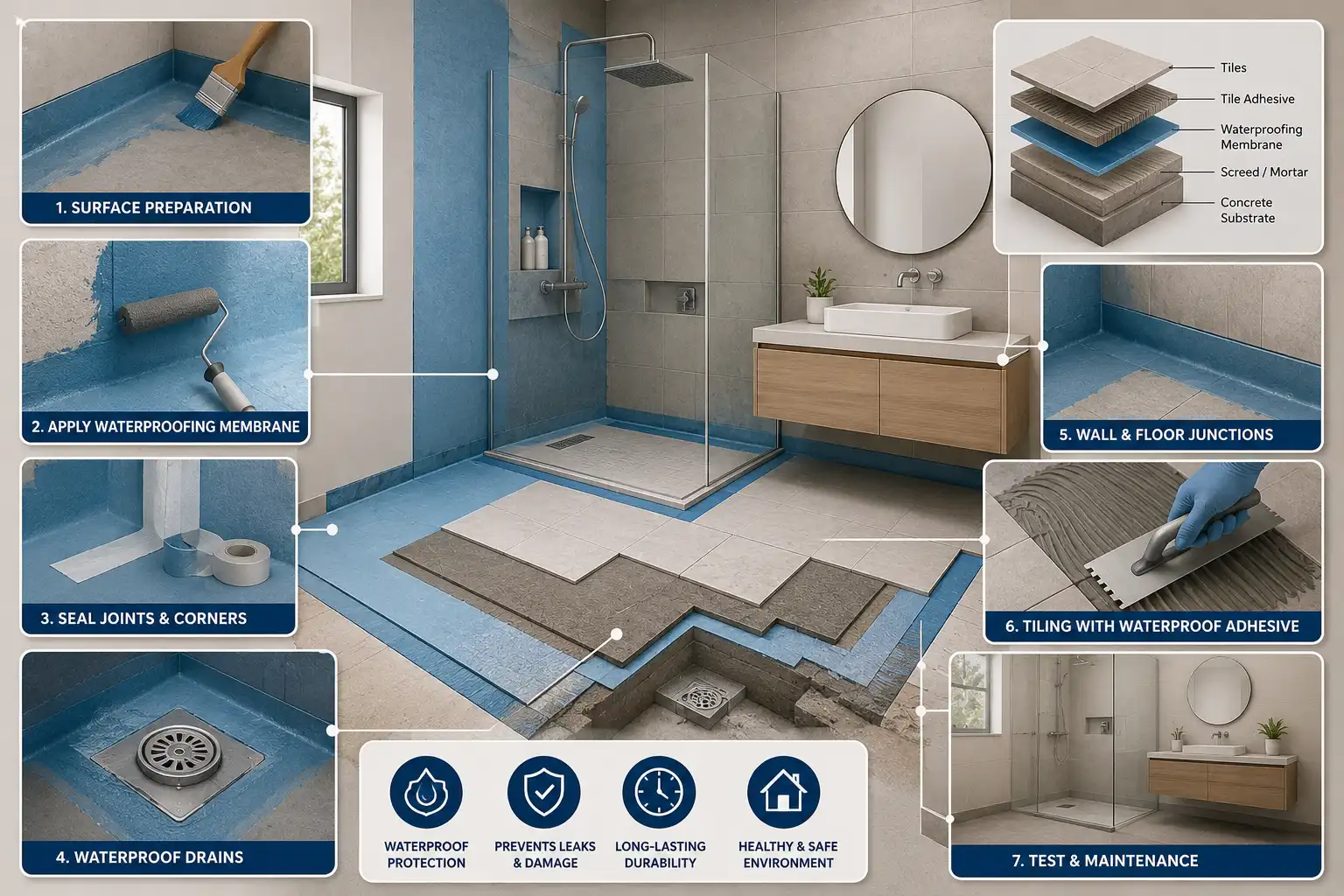
A bonded membrane is a flexible sheet that is fixed directly to walls and floors before tiling. It creates a continuous waterproof and vapor resistant layer, and tiles are then fixed directly over it with thin set mortar. Because the membrane is flexible, it can accommodate small movements in the substrate without cracking. 

GardMem 1000: For Bathrooms and Intermittent Use Steam Showers 

CP Global GardMem 1000 is a flexible, sheet applied waterproofing membrane and vapor retarder built with a soft thermoplastic polymer core and non woven polypropylene fleece on both sides. It bonds securely to ceramic, porcelain, and stone, and can be installed over gypsum wallboards, cement backer boards, and mortar bases. It is ideal for walls around showers and bathtubs and for steam showers with intermittent use. 

GardMem 2000: For Continuous Use Steam and High Humidity Areas 

For wet rooms, spas, and continuous use steam showers, GardMem 2000 steps up the protection. Its high density polyethylene core gives exceptionally low vapor permeability, acting as an advanced vapor barrier that safeguards substrates from moisture damage, mold, and mildew. The fleece backing on both sides ensures a strong bond with both the substrate and the tile mortar. 

Do Not Forget the Details: Corners, Pipes, and Joints 

Most leaks happen at transitions, not in the middle of a wall. A complete system includes sealing bands for butt and corner joints, flexible bands for expansion joints, preformed inside and outside corners, and pipe and valve seals with rubber gaskets. CP Global’s Golden Wrapping system includes all of these ancillary components so every vulnerable point is protected. 

Liquid Option for Roofs and External Areas 

For roofs, basement exterior walls, and swimming pools, a liquid applied solution like CP-Coat 1000 silane modified polyether waterproof coating forms a seamless elastic membrane. It is low VOC, non corrosive, UV resistant, and more durable than traditional polyurethane coatings. 

Conclusion 

Waterproofing is a small fraction of project cost but prevents the most expensive failures. Choose GardMem 1000 for standard bathrooms, GardMem 2000 for steam and high humidity areas, and complete the system with the right bands, corners, and seals. Talk to CP Global’s technical team for a system recommendation tailored to your project.

Why Tile Adhesive Is Better Than Traditional Sand Cement Mortar

Introduction 

For decades, tiles in India and around the world were fixed using a thick bed of sand cement mortar. It worked, but it came with problems: tiles popping off after a few years, white patches of efflorescence on walls, hollow sounds under floors, and slow, messy installation. Modern construction has moved on, and mineral tile adhesives are now the global standard. Here is why. 

1. Stronger, Certified Adhesion 

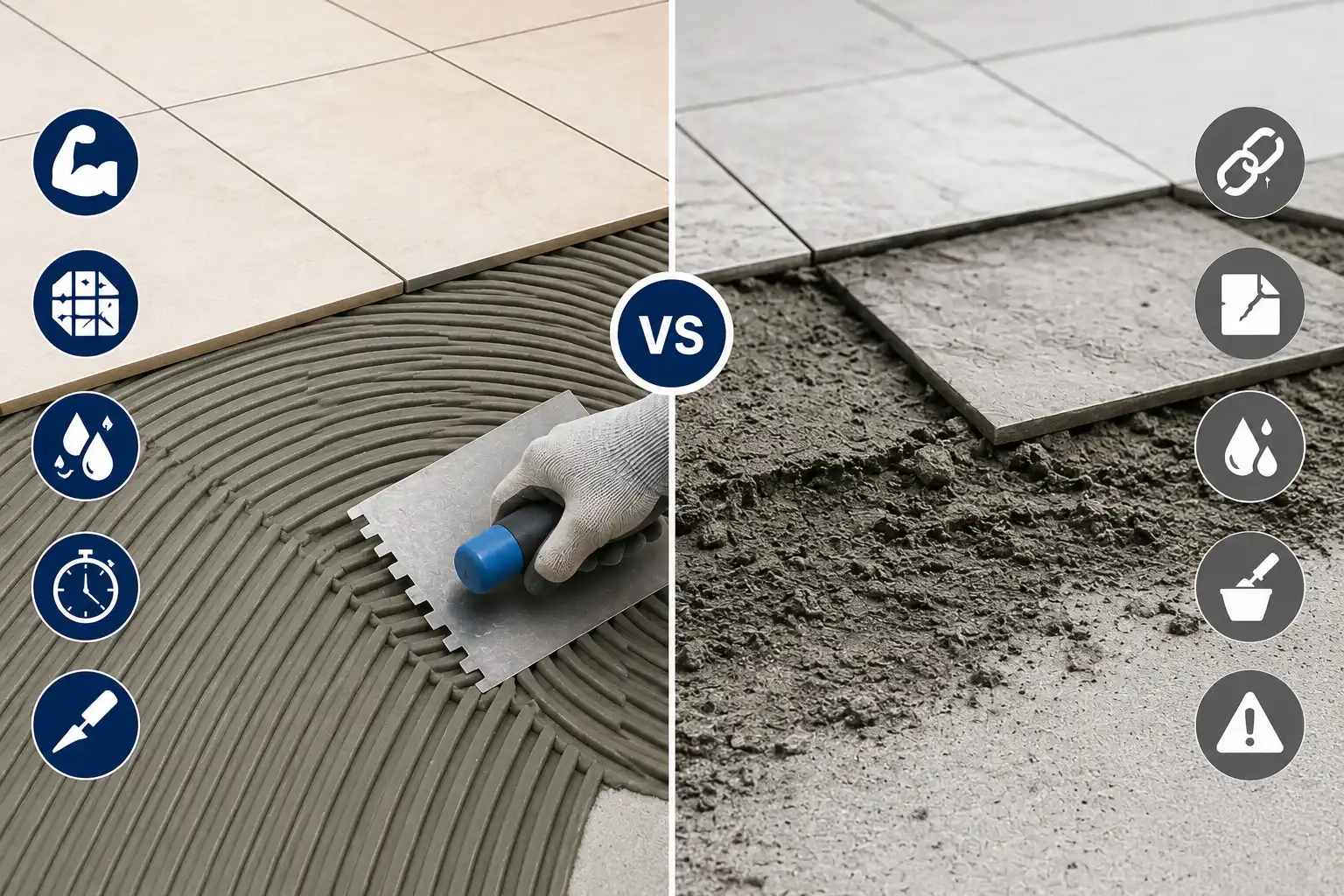
Sand cement mortar relies on mechanical grip alone, which weakens over time, especially with dense vitrified tiles that absorb almost no water. A mineral adhesive like CP Global PROFIX is engineered to bond chemically and mechanically with the tile and the substrate, guaranteeing safe fixing and certified mechanical resistance. The result is tiles that stay fixed for the life of the building. 

2. No Efflorescence, No Stains 

Those ugly white salt deposits you see on tiled walls are caused by moisture moving through ordinary mortar. PROFIX is formulated so it does not cause efflorescence and avoids moisture rising on the walls. Your tiles and grout lines stay clean and uniform. 

3. Ideal for Large Format Tiles and Natural Stone 

Large format vitrified slabs, marble, and natural stone are heavy and unforgiving. Traditional mortar struggles to support them evenly, leading to lippage and hollow spots. PROFIX gives full coverage under the tile and is specifically ideal for large formats, ceramic, porcelain, terracotta, marble, natural stone, and mosaics of every kind. 

4. No Shrinkage, No Hollow Tiles 

Thick mortar beds shrink as they dry, creating voids under the tile. These voids are why tiles sound hollow and eventually crack. A quality adhesive does not shrink, so the bond stays full and solid across the entire tile back. 

5. Faster, Cleaner, More Workable 

Adhesives like PROFIX offer a high degree of workability. They are easy to mix, easy to spread with a notched trowel, and give the installer guaranteed working time to adjust tiles perfectly. Less material, less mess, faster completion. 

6. Works Everywhere: Floors, Walls, Pools, Terraces 

From internal floors and walls to external facades, terraces, balconies, swimming pools, and fountains, a single proven adhesive system handles it all, including overlaying new tiles on old ones without demolition. 

Conclusion 

Switching from sand cement mortar to a certified mineral adhesive is one of the simplest upgrades you can make on any project. With the PROFIX range, including PROFIX Type 3 and PROFIX S1 for added flexibility, CP Global gives you safe fixing, zero efflorescence, and maximum adhesion backed by Italian technology. Contact our team to find the right adhesive for your next project. 

×

    WhatsApp