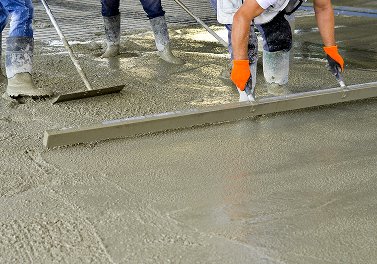
Common Floor Screed Problems and How to Prevent Them
17/11/2026

For generations, tiles in India were fixed the same way: a thick bed of cement and sand, a few taps with the trowel handle, and a hope that the tile would stay put. Today, more builders, contractors and homeowners are asking whether that method still makes sense, especially with large vitrified tiles becoming the norm.
In this blog, we compare tile adhesive and cement mortar side by side so you can decide which is right for your next project.
In the conventional method, a cement-sand mortar, usually around 20–30 mm thick or more, is spread on the floor, and tiles are pressed into it. On walls, mortar is often applied in dabs on the back of each tile.
This method has some advantages. Materials are familiar, easy to find and cheap per bag. It can also take up large level differences in the base. But it has real drawbacks with modern tiles:
A cement-based tile adhesive is a factory-made blend of cement, graded fillers and polymers. It is mixed with water and spread in a thin layer, usually a few millimetres, using a notched trowel.
The polymers in the adhesive allow it to grip dense tiles that plain cement struggles with. Because the bed is thin and even, it is far easier to achieve full contact between the tile and the surface.
| Factor | Cement Mortar | Tile Adhesive |
|---|---|---|
| Bond on vitrified tiles | Weak | Strong |
| Bed thickness | Thick (20 mm+) | Thin (a few mm) |
| Consistency | Varies by batch | Factory controlled |
| Risk of hollow tiles | High | Low when applied correctly |
| Tile soaking | Usually needed | Not needed |
| Dead load on structure | Higher | Lower |
| Site cleanliness | Messy | Cleaner |
Per bag, yes. Per square foot of finished, trouble-free floor, often not. Because adhesive is applied in a thin layer, you use much less material by volume than a thick mortar bed. Work is quicker, there is less waste, and, most importantly, there is far less risk of paying to lift and re-lay hollow or cracked tiles a year later.
When you count labour, wastage and repair costs together, a quality floor tile adhesive usually works out to be the better investment.
Cement mortar may still be used where the base is very uneven and a thick bed is needed to correct levels. Even then, the better approach is to first level the floor with a proper screed and then fix tiles with adhesive. This gives you a flat surface and a strong bond, instead of trying to do both jobs with one thick mortar layer.
Not all adhesives are the same, so match the product to the job:
You can compare all options in our tile and stone fixing solutions range.
Cement mortar served India’s builders well when tiles were small and porous. Today’s dense, large-format tiles need a stronger, more controlled bond, and that is exactly what a professional tile adhesive provides. For dependable tile adhesive in India and expert guidance, explore the range at CP Global Products.
For most modern tiles, yes. Tile adhesive gives a stronger bond on dense vitrified tiles, uses a thin, even bed that reduces hollow spots, and offers consistent quality compared with site-mixed cement mortar.
Tile adhesive costs more per bag, but it is applied in a much thinner layer, speeds up work and reduces wastage and repairs. Over the whole job, it is often comparable to or better value than cement mortar.
Tile adhesive is a thin-bed product and works best on a reasonably flat surface. For uneven floors, level the base first with a suitable screed, then fix tiles with adhesive.
No. Tiles are generally fixed dry when using a cement-based tile adhesive. Soaking is only needed with traditional cement mortar, unless the adhesive manufacturer specifically recommends otherwise.
Standard-size vitrified tiles indoors can be fixed with a good-quality wall and floor tile adhesive. For large-format vitrified tiles, natural stone or exterior areas, choose a high-strength Type 3 adhesive.